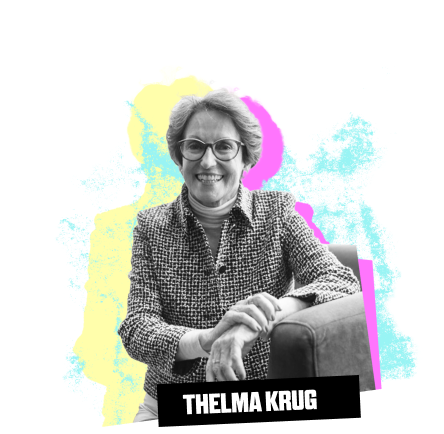
Thelma Krug is a retired researcher from the National Institute for Space Research (INPE). She is a mathematician, with a PhD in Space Statistics from the University of Sheffield, England. She was Assistant Secretary at the Department of Policies and Programs of Science and Technology of the then Ministry of Science and Technology; she was National Secretary at the Department of Climate Change and Environmental Quality of the Ministry of the Environment (MMA) and, from 2016 to 2017, she was Director of the Department of Policies to Combat Deforestation, at the MMA. From 2002 to 2015, she was a member of the Council of the Intergovernmental Panel on Climate Change (IPCC), and was its Vice-Chair from 2015 until July 2023. From 2019 to July 2023, she chaired the Terrestrial Observations Panel for Climate and, since August 2023, she has been the chairperson of the Steering Committee of the Global Climate Observing System (GCOS), of the World Meteorological Organization. For over 15 years, she represented Brazil in international negotiations in the United Nations Framework Convention on Climate Change, on topics related to land use and land use change; forests; national inventories of greenhouse gas emissions; and systematic research and observation, among others. She is a member of the roster of experts of the Convention, having participated in almost one hundred reviews and technical analyses of reports submitted by member countries to the Convention. In 2021, she was appointed as a member of the Board of Trustees of FAPESP.
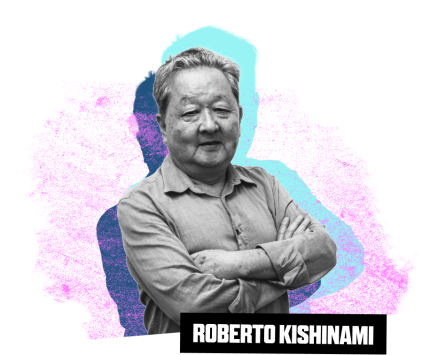
Roberto is a physicist from the University of São Paulo (USP), specializing in energy and climate change. He has been a consultant to banks, energy companies, governments, law firms and civil society organizations for 15 years. He has directed and participated in boards of civil society organizations and has been accompanying and participating in the United Nations Framework Convention on Climate Change (UNFCCC) since 1989.
Paulo Saldiva graduated from the University of São Paulo (USP) School of Medicine in 1977, earned his PhD in 1983, became a full professor in 1986, and an institute professor in the Department of Pathology at the USP School of Medicine in 1996. He was director of the USP Institute of Advanced Studies from 2016 to 2020, a member of the World Health Organization (WHO) Committee on Air Quality in 2005 and 2021, a member of the IARC panel that assessed the carcinogenicity of ambient air pollution in 2013, and a member of the WHO panel for the development of a verbal autopsy instrument to improve global vital statistics. Over the past six years, he has developed an autopsy platform for use in public health studies, including COVID-19. He is a member of the Scientific Committee of the International Society for Urban Health, the National Academy of Sciences, the National Academy of Medicine of Brazil, and TWAS. He received the Anchieta Medal from the city of São Paulo and was awarded the Order of Scientific Merit from the Brazilian Academy of Sciences.

Paulo Artaxo is a full professor at the Institute of Physics of USP and coordinates the Center for Sustainable Amazon Studies (CEAS) at USP. He is a member of the IPCC (Intergovernmental Panel on Climate Change of the UN), and has spent his career working with the environment and global climate change. He is a member of the Brazilian Academy of Sciences (ABC), the World Academy of Sciences (TWAS) and the Academy of Sciences of the State of São Paulo (ACIESP). He is also a vice-chair of the SBPC. He is chair of the scientific board of IPAM, and is a member of the Board of Directors of CNPEM, of CEMADEN, and other institutions. He is also a member of the National Council of Science and Technology (CNCT). He has received several awards, such as the Menção de Aplauso Científico, from the Federal Senate, for research in the Amazon (2004); the TWAS Award for Earth Sciences 2007, the title of Commander of the National Order of Scientific Merit (2010), the Almirante Álvaro Alberto award in 2016 and, in 2021, he received the CONFAP Science and Technology award. He was included in the list of Clarivate Analytics as belonging to the group of the most cited researchers in the world in the last 10 years.

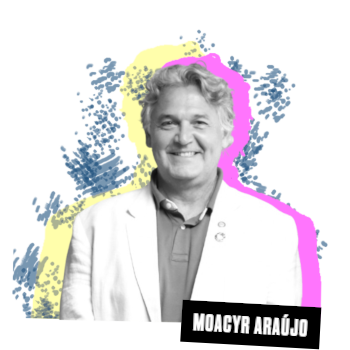
Moacyr has a degree in Civil Engineering from the Federal University of Pernambuco (1985), with a master's degree in Hydraulics and Sanitation from the University of São Paulo (1991), with a specialization (D.E.A. – 1992) and a Doctorate (DSc. – 1996) in Physique et Chimie de l´Environnement from the Institut National Polytechnique de Toulouse, in France. He is a full professor of the Department of Oceanography (DOCEAN), a researcher at the Center for Studies and Tests in Risk and Environmental Modeling (CEERMA), and a vice-rector of the Federal University of Pernambuco (UFPE). He is a co coordinator of Working Group 1 Scientific Basis of Climate Change of the Brazilian Panel on Climate Change. He is the scientific coordinator of the Brazilian Network of Research on Global Climate Change – Rede CLIMA. He is a member of the Pernambuco Academy of Sciences (APC). He is a member of the Author Team for the Atlantic Ocean Observing System Blueprint (2018-2019). He is a member of the Author Team for the Tropical Atlantic Observing System – TAOS Review (2018-2021). He is an expert reviewer of the Working Group I (WGI) of the IPCC Sixth Assessment Report (AR6-IPCC) (2020). He is a member of the National Committee on Antarctic Research (CONAPA) and a member of the Life Science Group of the Scientific Committee on Antarctic Research (SCAR). He is a member of the Commission Régionale d'Experts Économiques et Scientifiques (CREES) of the l´Agence Universitaire de la Francophonie (AUF).
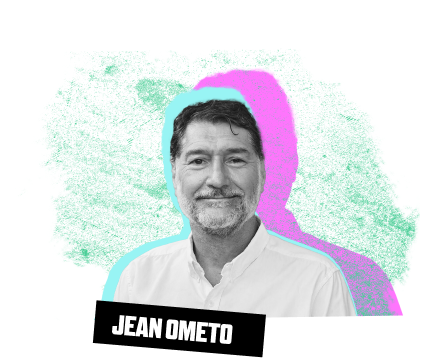
Jean Ometto has been a Senior Researcher at the National Institute for Space Research since 2009, and Head of the Division of Strategic Projects (DIP3). He is a permanent professor of the Postgraduate Program in Science of the Terrestrial System (CST/INPE). He is Vice-Coordinator of the Brazilian Network for Research about Global Climate Change (Rede CLIMA); Coordinator of the AdaptaBrasil MCTI Platform; Member of the Coordination Committee of the FAPESP Program for Research about Global Climate Change; and Representative of FAPESP to the Consortium of Financing Agencies “Belmont Forum.” He is a member of the Board of Trustees of the American Geophysical Union (AGU). He was appointed to the IPCC (Intergovernmental Panel on Climate Change), to the IPBES (Intergovernmental Science-Policy Platform on Biodiversity and Ecosystem Services) and to the Global Environmental Outlook 5, coordinated by the United Nations Environment Programme (UNEP).
Eduardo Delgado Assad was awarded a degree in Agricultural Engineering, in 1979, from the Federal University of Viçosa. He completed his master's degree and PhD in France. He was a researcher at Embrapa for 35 years. In 2011, he was the secretary of climate change and water resources at the Ministry of the Environment. He is a professor of the postgraduate
course in agribusiness at the Getúlio Vargas Foundation and a researcher at the Bioeconomy Observatory of GVagro, also at the Getúlio Vargas Foundation. Since 2012, he has been working with metrics and methodologies in carbon measurements in agriculture. He is a coordinator of the food security sub-topic at INCT Mudanças Climáticas [Climate Change] FAPESP/CNPQ. He is a consultant for FAO, Santander, and the Bunge Foundation. He is a member of the boards of Carrefour and Future Carbon and a director of the company Fauna Projetos. In 2021, he was awarded the Bunge Prize, Vida e Obra [Life and Work] for his work involving climate change.

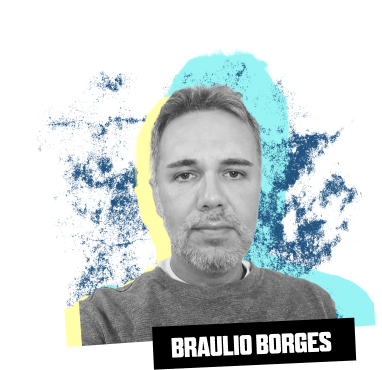
Bráulio Borges has a degree in Economics from FEA USP, from which he also obtained a master’s degree in Economic Theory. His master ‘s dissertation, entitled “Sustainability and limits of public debt,” received the National Treasury award in 2006. He has worked at LCA Consultores since 2004, with a focus on monitoring macroeconomic and energy transition. Since 2015, he has also been an associate researcher at FGV IBRE, the main think-tank of applied economics in Latin America. In recent years, he has been renowned for his work that estimated the macroeconomic impact of the chronic drought faced by Brazil since the past decade, as well as for studies that sought to value monetarily the economic cost to the world of the deforestation in the Amazon forest. He is developing estimates of potential GDP for Brazil that take into account some ecosystem services.