
Mobilizing public opinion so that more voices can be heard about tackling climate change is the objective of the area of Engagement of Agents of Change for Climate Action, of iCS. As COP 30 approaches, to be held in Belém (Pará), in 2025, iCS is working so that Brazilian civil society is strengthened and engaged to lead the journey up to the event. The objective is to provide visibility to the agendas and messages that will position climate instruments in favor of the territories, cultures, forests, cities, biodiversity, and quality of life of people all over the planet. This will be the first ever climate conference to take place in the Amazon.
The base of this work is Vozes [Voices], which is an ecosystem that brings together more than 30 non-governmental organizations, from within and without the Brazilian Amazon and from different segments (young people, urban populations, indigenous peoples, quilombolas and traditional communities), to discuss and prepare collective actions on different operating fronts, and also connecting and supporting the specific initiatives of each one of the participating organizations.
The objective is to promote a journey of mobilization and engagement for the climate with respect to COP-30 in Belém. “We aim to strengthen the ecosystem of organizations, collectives and movements to that they can influence the climate agenda and decisively mobilize society in its favor. COP 30 is a veritable demonstration of civic and democratic participation, as well as a window of opportunity for Brazil to build a positive legacy in the multilateral and domestic spheres,” says Leonildes Nazar, a specialist in engagement and advocacy in Climate Policy at iCS.
Vozes has been a space for the creation of active engagement strategies since 2021, whose organizations, for COP-30, aim to operate on one or more work fronts, such as campaigns and communication; activism and advocacy; mobilization; training; and research and advocacy in negotiations. For the journey to COP-30, four main agendas appear as the thematic focuses of the organizations – climate adaptation, energy transition, just transition and food systems.
“The operation strategy of a Brazilian climate movement only makes sense if it is built collectively. We need a long journey of mobilization and engagement around the key and minimally common themes in order to present them to society, respecting the particularities of the organizations and ensuring plurality so that the right messages reach the places where the agenda needs to advance,” says Nazar.
Learn about the initiatives and their results to date
In addition to the unified and coordinated actions within Vozes, the organizations that make up this ecosystem have been operating on strategic fronts of local, national and international climate policy, and should expand their agenda within the framework of the COP-30 in Brazil.
Engajamundo
Engajamundo is composed of young Brazilian leaders and has a broad network of volunteers from all the regions of the country. It was one of the organizers of RCOY – the Regional Latin American Climate Conference of Youth, which is a space for the strengthening of young activists and coordination between diverse youth networks, which took place for the first time in Brazil. Belém was the city chosen – not by chance – to host this event, demonstrating the key role of Engajamundo for the youth constituency also supported by iCS.
The RCOY took place in September, with events in several neighborhoods and regions of the city, such as Jurunas and the Ilha do Combú. During the Conference, the Youth Declaration was produced, to be delivered to the Amazon authorities during COP 30. It is also a key event during which the governance of the youth representation in the UNFCCC is defined.
Gheto Hub and Coalizão COP das Baixadas
The Coalizão COP das Baixadas is a network formed by 18 community organizations and peripheral collectives in Belém, combined so that the populations from these areas are heard and can help make the decisions related to policies to combat climate change. In this regard, under the leadership of Gueto Hub, one of the organizations that are part of the Coalition, the Yellow Zone Institutional Program was launched in September 2024. This seeks to decentralize the climate debate by taking actions and discussions about the topic to the communities outside of the center of the capital.
Through the creation of cultural zones, the Yellow Zone Festival inaugurated its first tourist information and community centers, in Vila da Barca, one of the largest communities built on stilts in Latin America, and in Jurunas, one of the most populated neighborhoods in the capital of Pará, formed by an ethnic and racial diversity of indigenous, black and riverside peoples.

The Yellow Zones will have activities involving awareness, training and pro-climate mobilization, through cultural actions and demonstrations that strengthen the voices of the communities. In addition to these two locations, activities are also planned in other peripheral areas of the Belém metropolitan region up to COP-30, promoting the involvement of the local population with the topics and the event.
The name ‘ yellow zone’ is an allusion to the blue zone and the green zone, which are the areas around which the official activities of the Climate Conferences are organized. The first is the restricted area, where the negotiations between the member countries of the United Nations Framework Convention on Climate Change (UNFCCC) take place. The green zone is the area that is open to the general public, where the side events of the COPs take place.
City Laboratory
A civil society organization, the City Laboratory has a focus on the creation of innovative solutions to make cities more democratic, sustainable and resilient. Created in Belém, it operates mainly in the urban areas of the Amazon, with actions to address challenges such as climate change, through community participation.
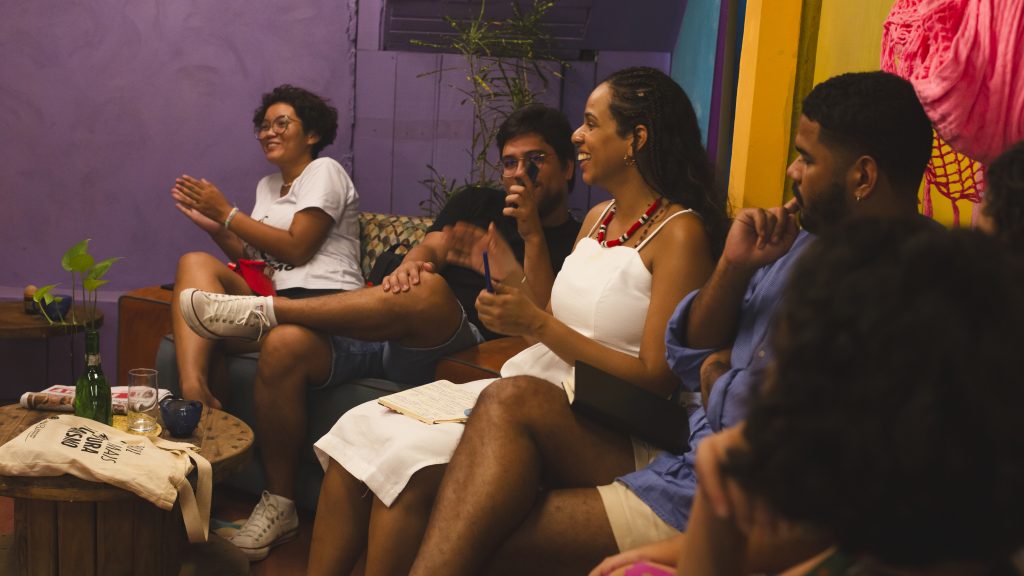
In 2024, the City Laboratory held the 3rd Meeting of the Cities, in Belém, with the aim to create a space for dialogue for the construction of a sustainable agenda for the cities in the Amazon and to promote an ecosystem of innovation, allowing the population to pay a leading role in the search for solutions to be taken to COP 30. These are issues such as environmental justice and the right for the city to set the tone for the debate. The fourth meeting is scheduled to take place in 2025.
In addition, in 2024, the City Laboratory launched another edition of its Itinerant Museum of the Amazon (MIA) to the public, which was initially created in 2022, as part of the celebrations for Amazon Day. The Museum displays creations from the City Laboratory, as well as works and artists that are involved with the rescue of the ancestry of the Amazonian peoples, their origins, respect and appreciation of natural resources. It includes their contributions to a new repertoire of cities, within and without the region, which are resilient and adapted to face the risks associated with climate change.
Iyaleta Research Association
This is an institution that is recognized as an Institute of Science and Technology (ICT), dedicated to the production of research with a focus on solutions to eliminate racial, ethnic, territorial, gender and social inequalities. The organization also acts as an observer member of the United Nations Framework Convention on Climate Change (UNFCCC), contributing to the advance of knowledge in the areas of human, natural and technological sciences.
In 2024, Iyaleta organized the 3rd edition of the Spring Iyaleta, with the theme “Innovation and Transparency: climate adaptation with equity.” This initiative consisted of three free online courses, one of which was entitled: “Overview of the international climate negotiations between COP 29 and COP 30.”

Spring Iyaleta had the objective to deepen the knowledge about innovation and transparency in the context of climate adaptation, promoting technical and technological discussions that could broaden the scientific understanding of the urban and rural realities in Brazil.
COP 30 Committee
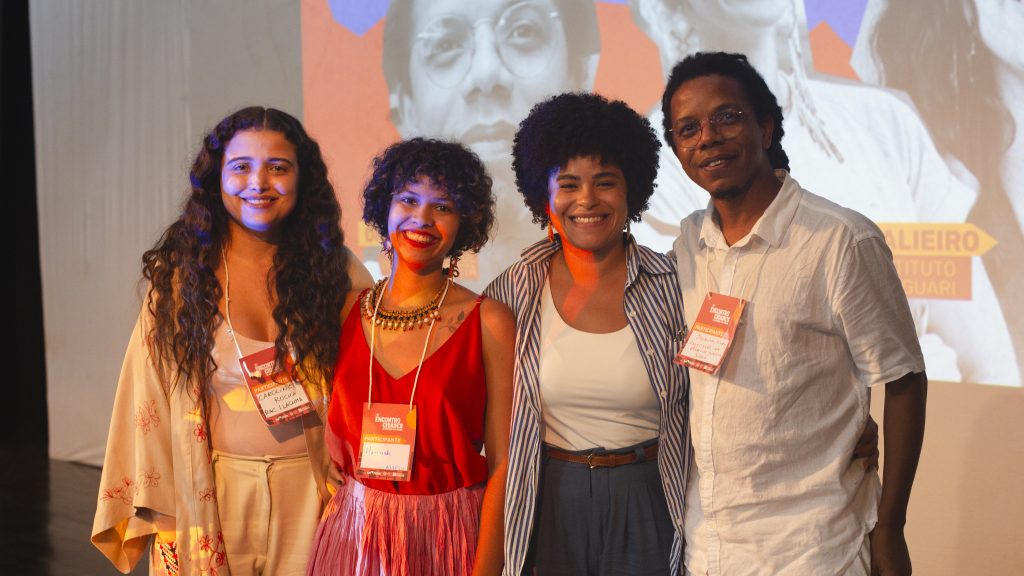
The union of several organizations with the objective of building a legacy for the climate agenda with a socioenvironmental perspective from the Amazon and Latin America, within the framework of the 10 years since the Paris Agreement, took place in 2023, at COP 28, in Dubai. The COP-30 Committee is led by five Brazilian Amazonian organizations – the Chico Mendes Committee, the City Laboratory, the Mapinguari Institute, Mandi and Tapajós de Fato, and composed of more than 20 members of civil society from different segments. It seeks to expand and strengthen advocacy, from the Amazon territory, in local, national and international climate conferences and forums, in order to guarantee a greater commitment from governments with actions connected to the demands, realities and dynamics of the territories.
In October 2024, the COP-30 Committee launched the campaign “Our chance to postpone the end of the world,” aiming to strengthen the preparation of national goals to tackle the climate crisis. The launch of the campaign took place with the publication of a document containing goals and guidelines so that the climate solutions stipulated and implemented by Brazil are aligned with the goals and desires of its citizens.
The document presents proposals for five thematic areas: climate adaptation, ecological restoration, food systems, means of implementation and climate governance, and territorial demarcation. The launch took place at a strategic moment, taking into consideration the crucial period for the drafting of proposals that will be presented at the forthcoming international conferences about the climate.
Amazon at the center of the debate
Vozes was one of those responsible for bringing the Amazon to the center of the debate in 2022 through the initiative ‘Amazon and the Electorate,’ which involved more than 100 organizations, to influence public opinion and raise awareness of the candidacies.
The actions took place throughout the country, between September 1 and 10, 2022. The organizations were coordinated through engagement hubs, with the main peak of mobilization being Amazon Day, which was celebrated on September 5, about one month before the first round of the elections.
There were several activities and demonstrations through the Amazon Day Festivals (10 shows and festivals in eight cities, with a public of over 200,000 people), Virada Amazônia de Pé (650 registered activities) and another 40 initiatives by iCS grantees and partners. In total, around 700 simultaneous actions and campaigns took place.
Specific campaigns were also launched for Amazon Day, with the objective of mobilizing society and, in particular, the media, to increase its reach and to talk to the different profiles of the Brazilian electorate about issues related to the Amazon region.
One of the campaigns was ‘Mother Amazon of Brazil,’ which was a profile created on the main social networks and that provided a unique tone of voice to its posts: the Amazon speaking in the first person, with the typical vocabulary of a mother talking to her child. More than 42 million unique users were reached by at least one post from the profile and around 8 million engagements were obtained through likes, comments, saves, clicks on links, and other forms of interaction.
The media highlighted the campaigns and mobilizations. In total, 220 media outlets published articles and reports, which were added to video insertions and actions on national TV programs.
On Amazon Day, most of the presidential candidates spoke about the Amazon on their social media accounts.